
In every chemistry or research laboratory, certain glassware pieces are considered indispensable—and the round bottom flask is one of them. Recognized by its spherical base and narrow neck, this flask is widely used for heating, mixing, and conducting chemical reactions safely and efficiently. From academic labs to industrial research facilities, round bottom flasks play a crucial role in ensuring accurate results and controlled processes. In this blog, we’ll explore what a round bottom flask is, its laboratory uses, different types such as the 3-neck round bottom flask, and why it remains essential in modern lab setups.
A round bottom flask is a type of laboratory glassware with a spherical body and one or more necks. The round shape allows uniform heat distribution, reducing the risk of thermal stress and cracking during heating. Typically made from high-quality borosilicate glass, these flasks are designed to withstand high temperatures and chemical exposure.
Unlike flat-bottom flasks, round bottom flasks require support such as cork rings, clamps, or heating mantles. Their design makes them ideal for experiments involving heating, reflux, distillation, and chemical synthesis.
The popularity of round bottom flasks comes from their versatility. Some of the most common round bottom flask uses include:
Because of their uniform heating capability, round bottom flasks are preferred over other containers for reactions that require consistent thermal control.
When it comes to round bottom flask uses in laboratory environments, their role is even more significant. These flasks are commonly used in:
Their compatibility with condensers, adapters, and heating mantles makes them suitable for complex laboratory setups where precision and safety are critical.
Round bottom flasks are available in several configurations to suit different experimental needs. The main types include:
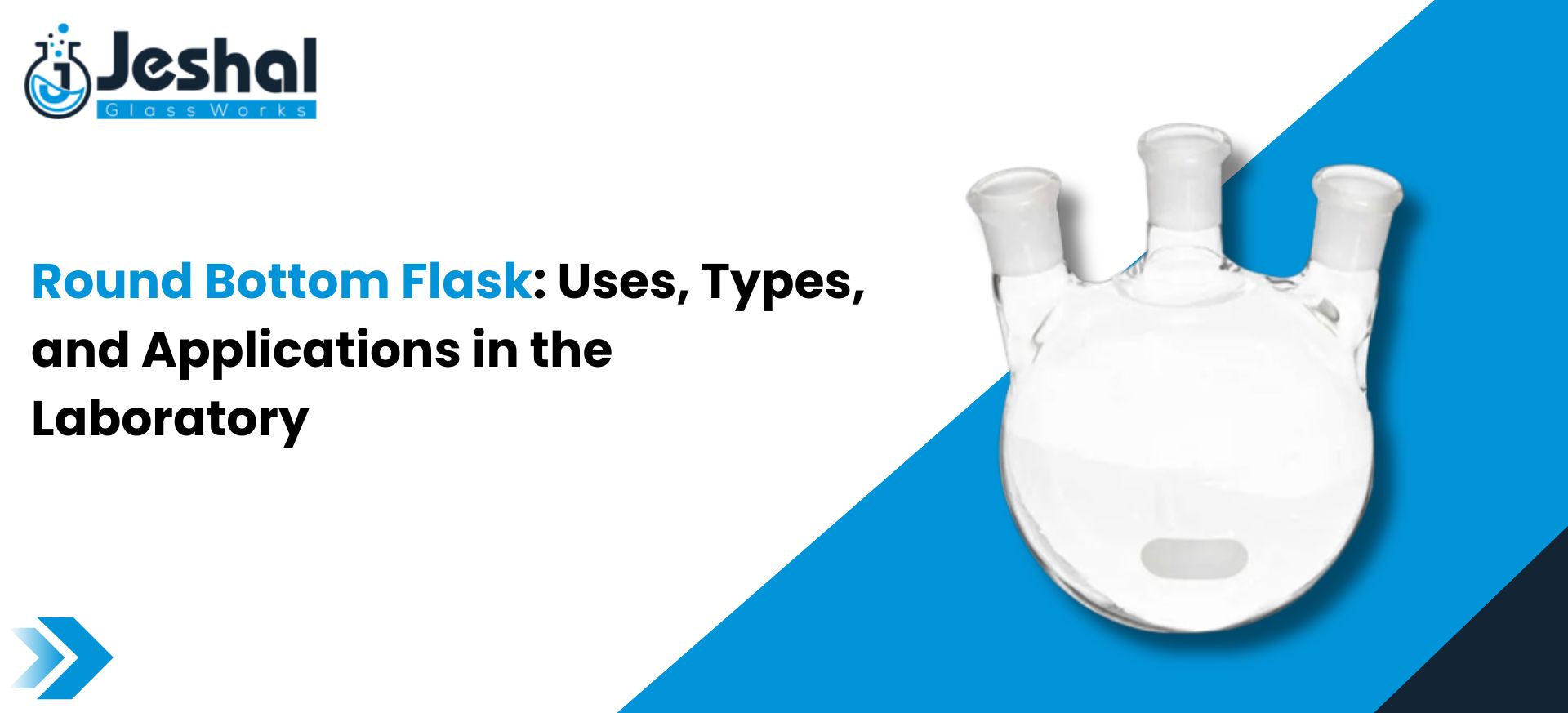
Key benefits of a 3-neck round bottom flask include:
Because of these advantages, 3-neck flasks are widely used in pharmaceutical research, chemical manufacturing, and academic laboratories.
There are several reasons why round bottom flasks remain a laboratory standard:
These benefits make round bottom flasks reliable tools for both routine and specialized lab work.
Selecting the right round bottom flask depends on your laboratory requirements. Consider the following factors:
Choosing the correct flask improves efficiency, safety, and experimental accuracy.
Jeshal Glass Work is a trusted manufacturer and supplier of high-quality laboratory glassware, including round bottom flasks. Each flask is crafted using premium borosilicate glass to ensure durability, thermal resistance, and chemical stability.
With precise manufacturing standards, a wide range of sizes, and options such as 3-neck round bottom flasks, Jeshal Glass Work serves laboratories, research institutes, and industrial clients with reliable glassware solutions. Their commitment to quality and consistency makes them a preferred choice for professionals who value performance and safety.
The round bottom flask remains an essential piece of laboratory glassware due to its versatility, safety, and efficiency. From basic heating tasks to advanced chemical reactions using 3-neck round bottom flasks, its applications span across industries and research fields. Understanding its uses, types, and advantages helps laboratories make informed choices for better results.
If you’re looking for durable, precision-made round bottom flasks that meet laboratory standards, Jeshal Glass Work offers dependable solutions tailored to your needs.
Contact Jeshal Glass Work today to get high-quality round bottom flasks for your laboratory or industrial applications.
A round bottom flask is used for heating, reflux, distillation, and conducting chemical reactions that require uniform heat distribution.
Its spherical shape ensures even heating, reduces thermal stress, and improves safety during high-temperature experiments.
Round bottom flasks are commonly used in chemistry, pharmaceutical, research, and educational laboratories for controlled reactions.
A 3-neck round bottom flask allows multiple attachments like condensers and thermometers, making it ideal for complex reactions.