
In modern chemical processing, equipment selection directly affects safety, efficiency, and product quality. Among the most trusted materials in corrosive and high-temperature environments is the borosilicate glass kettle. Known for its exceptional chemical resistance and thermal stability, this equipment plays a crucial role in chemical plants where precision and purity matter.
From handling aggressive acids to enabling clear process monitoring, borosilicate glass kettles have become a preferred solution across chemical, pharmaceutical, agrochemical, and research facilities. In this guide, we explore their benefits, working principle, performance factors, and how to choose the right system for your plant.
Chemical plants deal with aggressive media, high temperatures, and sensitive reactions. Here’s why borosilicate glass equipment stands out:
1. Superior Chemical Resistance :
2. Excellent Thermal Shock Resistance :
3. Transparent Monitoring :
4. High Purity & Non-Contamination :
5. Long Service Life :
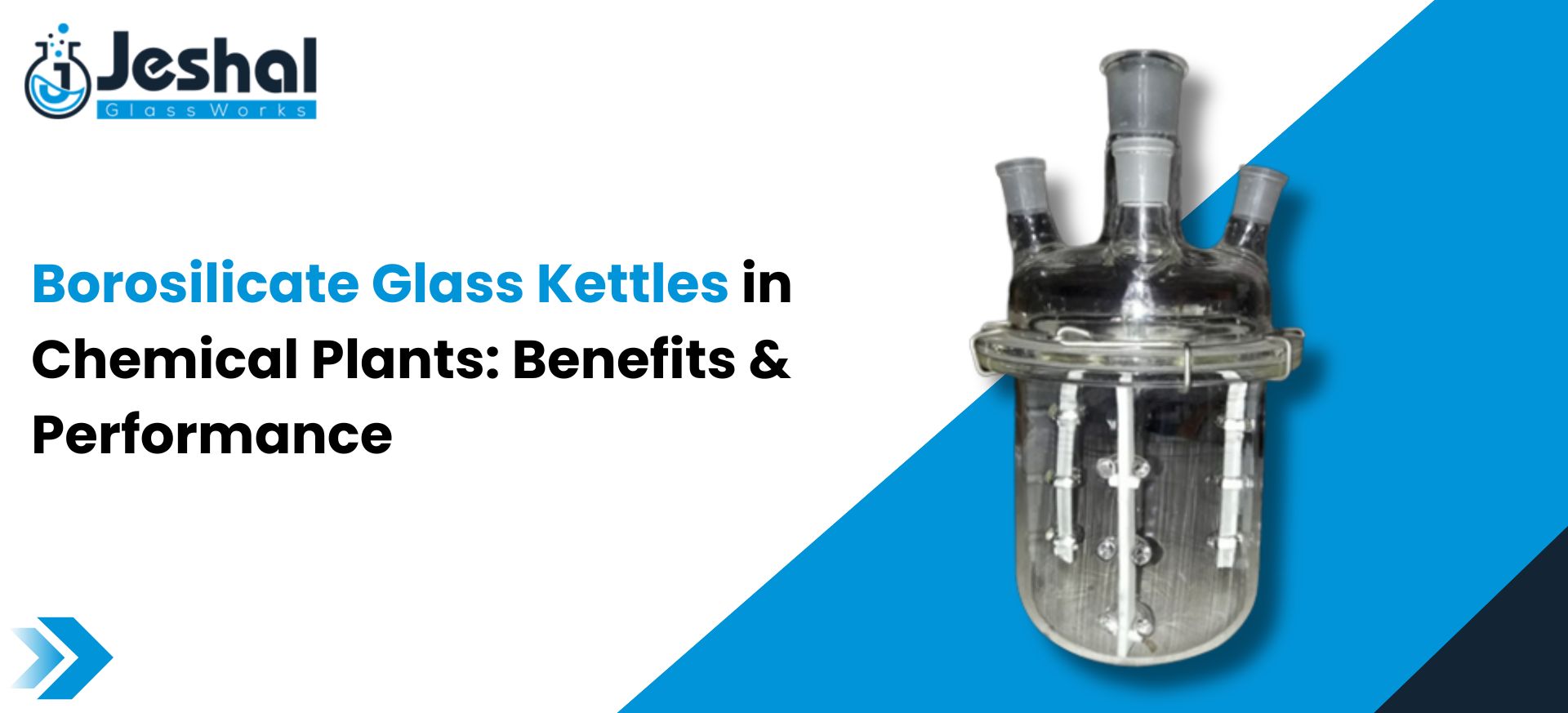
A borosilicate glass kettle is typically used for heating, mixing, reacting, or distilling chemicals. Its working principle is straightforward yet highly efficient.
The system may be integrated with condensers, receivers, or other borosilicate glass equipment for complete processing setups.
When evaluating a glass kettle for chemical plant use, performance depends on several key factors:
Careful engineering and quality manufacturing significantly influence overall system performance.
| Feature | Borosilicate Glass Kettle | Stainless Steel Kettle |
|---|---|---|
| Chemical Resistance | Excellent | Moderate |
| Transparency | Fully Transparent | Opaque |
| Corrosion | No rust | Prone to corrosion |
| Product Purity | High | Possible contamination |
| Maintenance | Low | Higher |
While stainless steel may suit high-pressure systems, borosilicate glass kettles are ideal for corrosive and purity-sensitive processes.
A glass kettle for chemical plant operations is widely used in:
Its adaptability makes it suitable for both small-scale research units and larger industrial applications.
Although borosilicate glass is highly durable, proper care enhances lifespan and safety.
Routine inspections reduce downtime and prevent unexpected failures.
Selecting the correct industrial glass kettle requires careful evaluation:
Consulting a knowledgeable glass kettle manufacturer in India ensures proper design, fabrication, and installation support.
When investing in borosilicate glass equipment, quality manufacturing is crucial. Jeshal Glass Works is known for delivering precision-engineered industrial glass solutions tailored to chemical plant requirements.
What sets Jeshal Glass Works apart?
Their experience in manufacturing industrial glass kettles ensures systems that meet operational standards and industry expectations.
A borosilicate glass kettle is more than just a processing vessel—it is a critical component that enhances safety, efficiency, and product purity in chemical plants. With superior chemical resistance, excellent thermal stability, and real-time visibility, it remains a preferred choice for modern industrial applications.
Choosing the right design, understanding performance factors, and partnering with an experienced manufacturer can significantly improve your plant’s productivity and long-term reliability.
If you are planning to upgrade or install a new glass kettle system, consult the experts at Jeshal Glass Works to discuss customized solutions tailored to your chemical processing needs.
Contact today to request a quote and optimize your plant performance with high-quality borosilicate glass equipment.
A borosilicate glass kettle is used for heating, mixing, reacting, and distilling chemicals in industrial and laboratory environments.
It offers excellent chemical resistance, high thermal shock stability, and contamination-free processing.
Typically, borosilicate glass kettles can withstand temperatures up to around 200°C, depending on design and operating conditions.
For corrosive and purity-sensitive processes, borosilicate glass kettles provide better chemical resistance and visibility than stainless steel.
Consider capacity, heating type (jacketed or non-jacketed), agitation needs, and chemical compatibility before selecting the system.