
Selecting the right glass heat exchanger for your plant is not just a technical decision—it directly impacts process efficiency, product quality, safety, and long-term operational costs. In industries where corrosive fluids, temperature control, and purity standards are critical, the wrong heat exchanger can lead to downtime, contamination risks, and costly maintenance.
Whether you operate a chemical plant, pharmaceutical unit, or specialty process facility, understanding how to evaluate and select the ideal glass heat exchanger ensures optimal performance and reliability. In this guide, we’ll walk you through key selection factors, types, benefits, and how to determine when a custom solution is necessary.
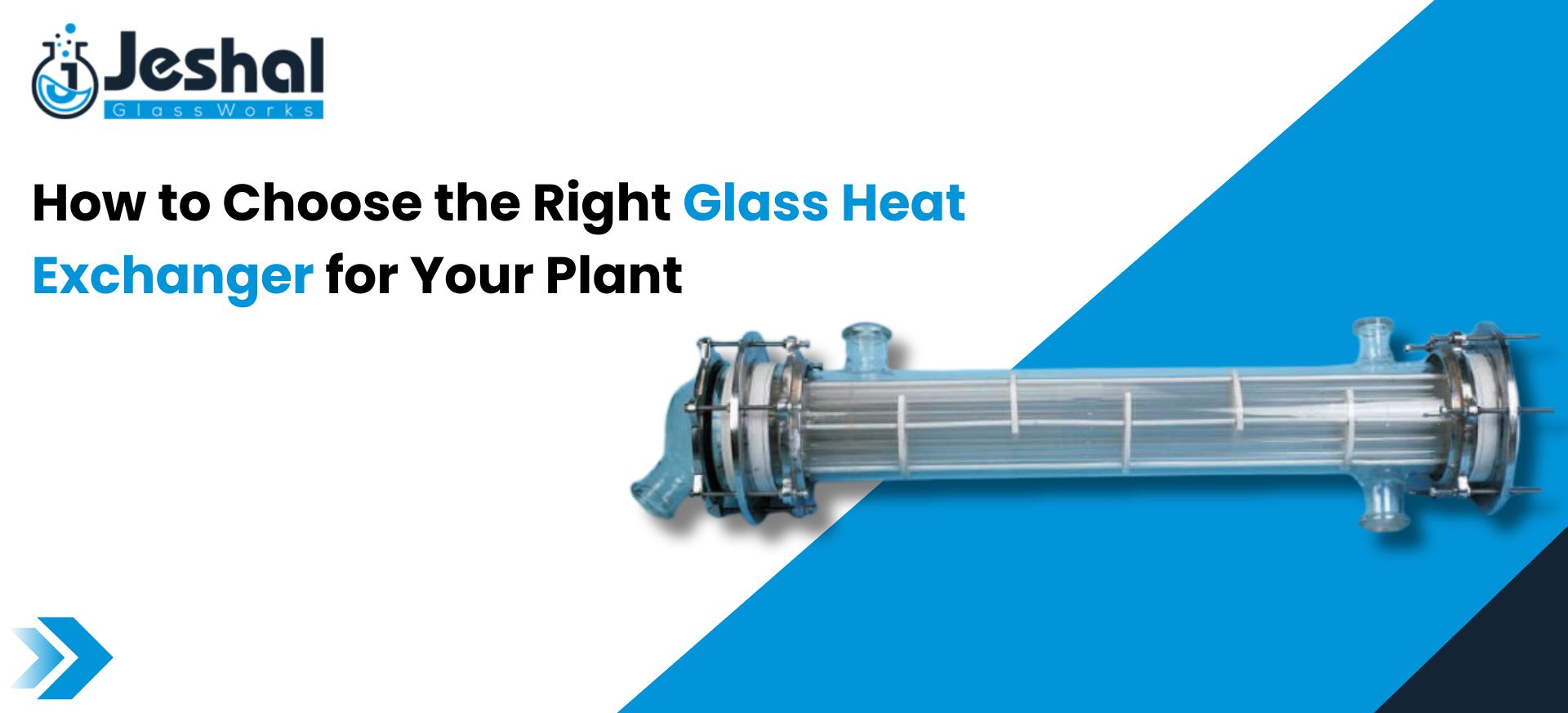
A glass heat exchanger is a process equipment component designed to transfer heat between two fluids while keeping them physically separated. Unlike metal heat exchangers, these systems are manufactured using high-grade borosilicate glass, known for its chemical resistance, transparency, and thermal stability.
Glass heat exchangers are commonly used in processes involving corrosive chemicals, high-purity fluids, or where visual monitoring is required.
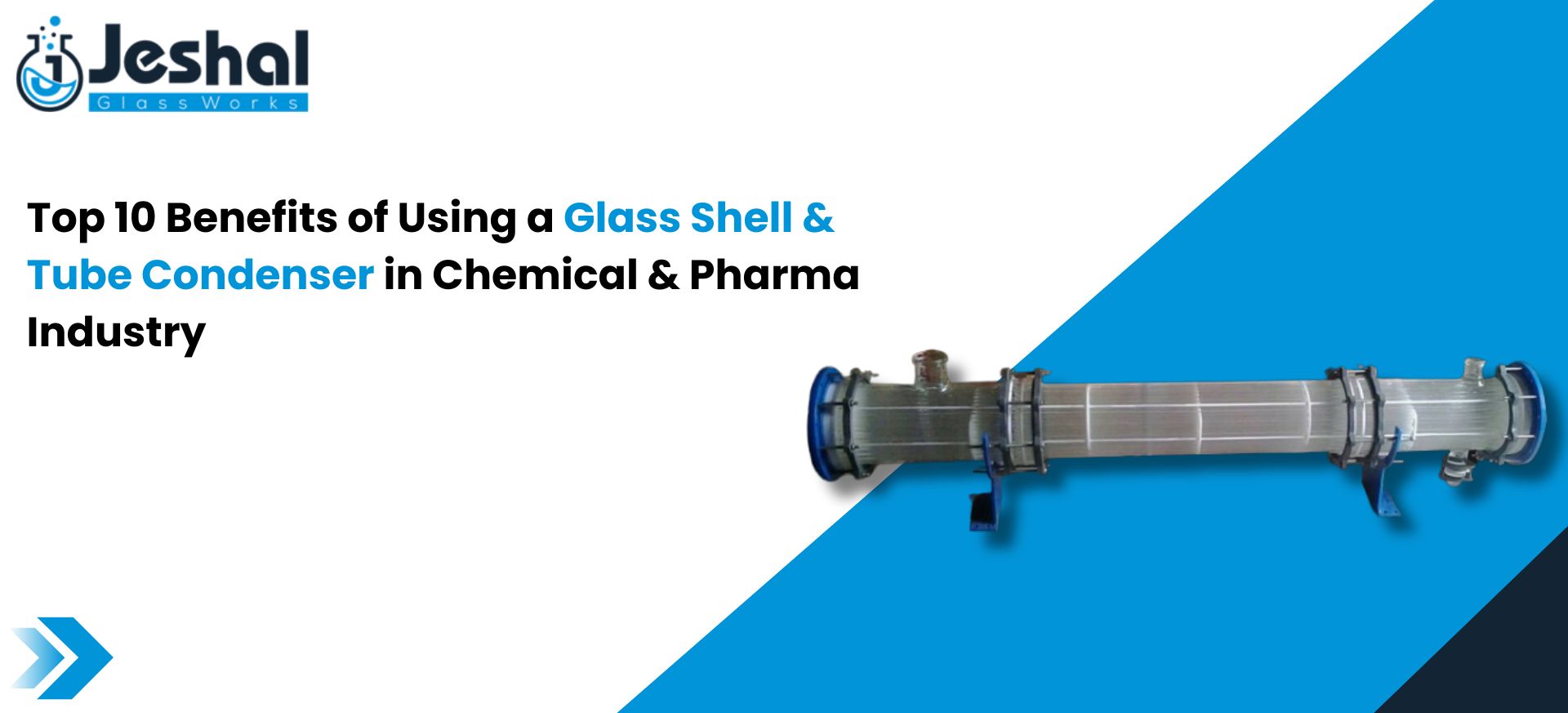
One of the most widely used designs is the glass shell and tube heat exchanger, where:
The transparency of glass allows operators to monitor flow behavior, scaling, or fouling—an advantage not available in metal systems.
Choosing the right glass heat exchanger requires careful evaluation of multiple process parameters.
1. Operating Temperature and PressureEvery heat exchanger has design limits. Evaluate:
Borosilicate glass offers excellent thermal resistance, but proper sizing and wall thickness are crucial for safety.
2. Chemical CompatibilityIf your process involves corrosive acids, solvents, or reactive chemicals, compatibility becomes critical. Glass heat exchangers are ideal for aggressive media because glass does not corrode like metal.
Always ensure:
Determine your required:
The required heat transfer area will influence whether a compact unit or a larger glass shell and tube heat exchanger is needed.
4. Type of Glass Heat ExchangerDifferent processes require different designs:
Choosing the right type ensures maximum efficiency and minimal pressure drop.
5. Installation Space and LayoutYour plant layout matters. Consider:
A poorly fitted unit can complicate servicing and increase downtime.
6. Maintenance and Cleaning RequirementsTransparent glass allows visual inspection, making maintenance easier. However, accessibility for cleaning and safe handling must also be considered during selection.
Understanding available types helps simplify your selection.
Glass Shell and Tube Heat ExchangerThis is the most common industrial design. It provides:
It is widely used in chemical processing and solvent recovery systems.
Coil Type Glass Heat ExchangerCompact and suitable for moderate heat transfer requirements. Often used in pilot plants and small process setups.
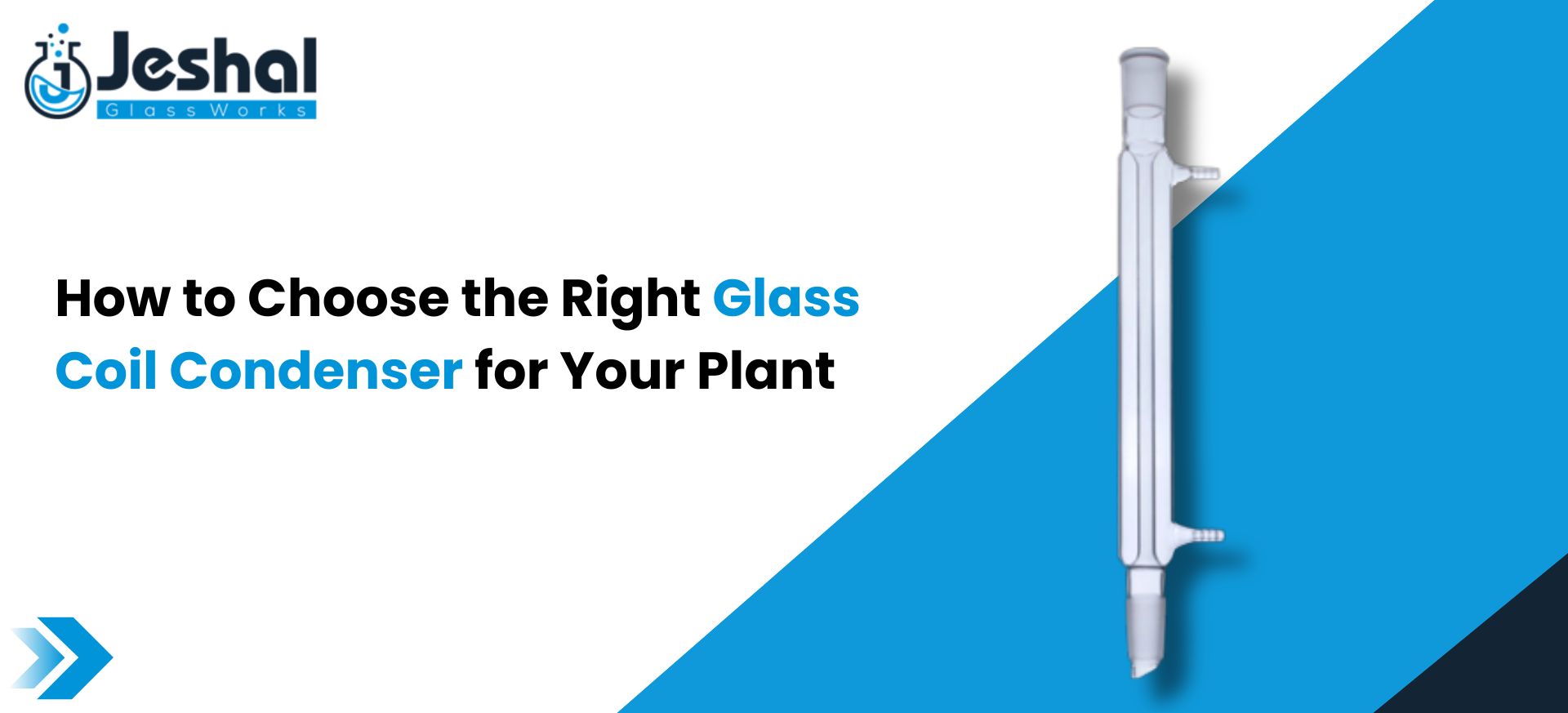
Glass CondenserDesigned primarily for condensing vapors in distillation systems. These units ensure efficient vapor-to-liquid conversion.
Custom Glass Heat ExchangersWhen standard designs don’t meet process demands, custom-engineered units provide tailored solutions based on temperature, pressure, and flow conditions.
Selecting the correct glass heat exchanger delivers measurable advantages:
Sometimes standard units are not enough. You may require a custom solution if:
A custom-designed glass heat exchanger ensures optimal performance without compromising safety.
When selecting a glass heat exchanger manufacturer, expertise and precision matter.
Jeshal Glass Work specializes in manufacturing high-quality glass heat exchangers, including glass shell and tube heat exchangers, designed for industrial performance and reliability.
Why choose Jeshal Glass Work?
With strong technical knowledge and industry experience, Jeshal Glass Work delivers solutions tailored to your plant’s specific requirements.
Choosing the right glass heat exchanger is a strategic decision that affects efficiency, safety, and long-term operational performance. From evaluating heat load and chemical compatibility to selecting the right design—every factor plays a crucial role.
A properly selected unit, especially a well-designed glass shell and tube heat exchanger, can significantly enhance process reliability and reduce maintenance costs.
If you're planning to upgrade or install a new glass heat exchanger in your plant, consult experts who understand both engineering precision and process requirements.
Contact Jeshal Glass Work today to discuss your glass heat exchanger needs and get a customized solution designed for maximum performance and durability.
Consider operating temperature, pressure, chemical compatibility, heat load, and installation space before selecting a unit.
It is recommended for higher heat transfer requirements and larger industrial applications.
Yes, borosilicate glass resists most acids and solvents, making it suitable for corrosive processes.
You may need one if your process has unique temperature, pressure, or layout requirements.
Correct sizing ensures efficient heat transfer, safe operation, and reduced maintenance issues.