
Choosing the right glass coil condenser is a critical decision for any chemical or process plant. The condenser directly impacts heat transfer efficiency, product quality, and overall operational safety. Selecting the wrong type or size can lead to poor condensation, higher energy consumption, and increased maintenance costs.
In industries dealing with corrosive chemicals and high-temperature vapors, glass coil condensers—especially those made from borosilicate glass—offer a reliable and efficient solution. This guide will help you understand how to choose the right condenser based on your plant’s specific requirements.
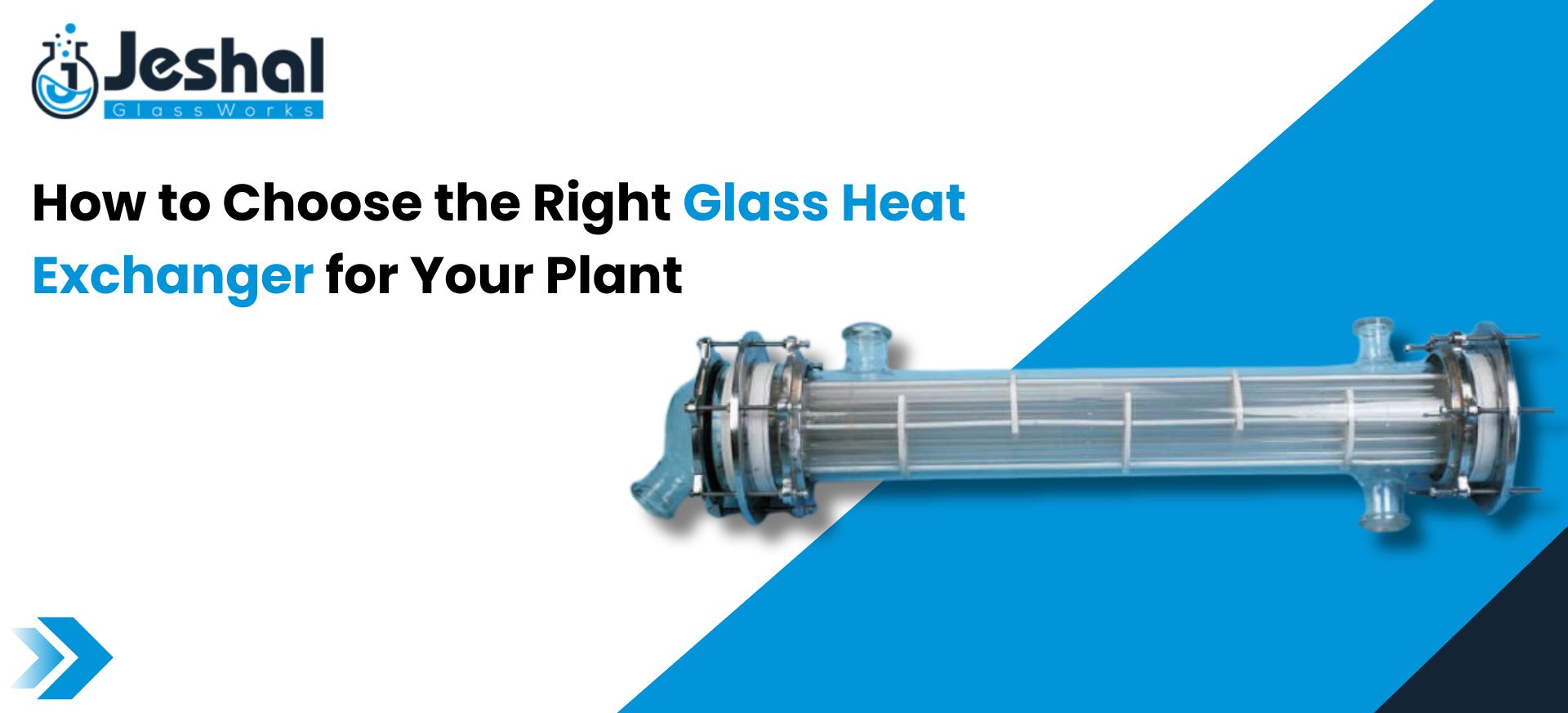
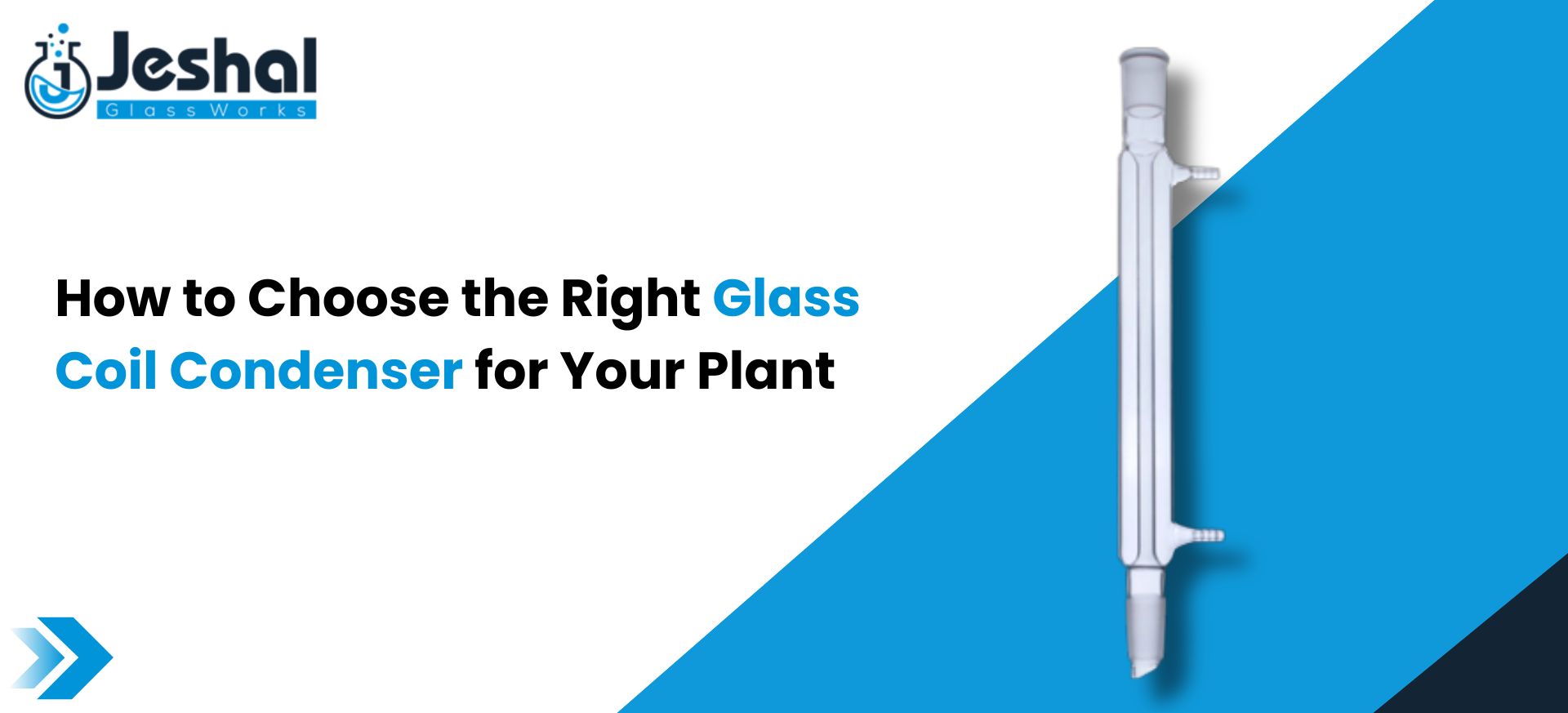
A glass coil condenser is a heat exchange device designed to convert vapors into liquid by cooling them. It consists of a coiled glass tube enclosed within a shell where a cooling medium (usually water) circulates.
Made from borosilicate glass 3.3, these condensers are widely used in chemical, pharmaceutical, and research industries due to their excellent resistance to corrosion and thermal stress.
Selecting the right condenser involves evaluating multiple technical and operational parameters:
Many plants face performance issues due to incorrect selection. Avoid these common mistakes:
Avoiding these errors can save significant operational costs and downtime.
| Feature | Glass Coil Condenser | Metal / Shell & Tube Condenser |
|---|---|---|
| Chemical Resistance | Excellent | Moderate |
| Corrosion | No rust | Prone to corrosion |
| Visibility | Transparent | Opaque |
| Maintenance | Low | Higher |
| Suitability | Corrosive processes | High-pressure systems |
Glass coil condensers are ideal for applications where chemical resistance and purity are top priorities, while metal condensers may be preferred for high-pressure environments.
To ensure long-term performance, follow these maintenance practices:
Proper maintenance not only extends lifespan but also ensures consistent process performance.
Choosing the right manufacturer is as important as selecting the equipment itself. Look for:
A reliable manufacturer will guide you through design, selection, and installation.
When it comes to high-quality glass process equipment, Jeshal Glass Works is a trusted name in the industry. They specialize in manufacturing precision-engineered glass coil condensers tailored to specific industrial needs.
Key Advantages:
Their experience ensures that you get a condenser designed for optimal efficiency and long-term reliability.
Choosing the right glass coil condenser is essential for achieving efficient heat transfer, maintaining product quality, and ensuring safe plant operations. By considering factors like process requirements, cooling capacity, design, and material quality, you can make an informed decision that supports long-term performance.
Partnering with an experienced manufacturer further ensures that your system is designed to meet your exact operational needs.
If you are planning to upgrade or install a new condenser system, Jeshal Glass Works can help you find the perfect solution.
Contact now to get expert guidance and a customized quote for your glass coil condenser requirements.
A glass coil condenser is used to cool vapors and convert them into liquid in processes like distillation, evaporation, and solvent recovery.
They offer excellent chemical resistance, corrosion-free performance, and allow visual monitoring of the process.
The size depends on your plant’s capacity, vapor load, and required heat transfer efficiency.
Borosilicate glass condensers can typically handle temperatures up to around 200°C, depending on design.
Regular inspection, proper installation, avoiding thermal shock, and routine cleaning help extend its life.